Yousuf Karsh: Canada's Portrait Legend
Ask a room of photographers to name a famous Canadian behind a camera and one name lands first: Yousuf Karsh (1908–2002). Born in Mardin and a survivor of the Armenian genocide, he arrived in Canada as a teenager, built a studio in Ottawa — and then photographed nearly every defining face of the twentieth century.
The thirty seconds that changed everything
On December 30, 1941, days after Pearl Harbor, Winston Churchill addressed Canada's Parliament and then sat, reluctantly, for Karsh in a side room. Churchill lit a cigar and glowered. Karsh stepped forward, politely removed the cigar — and clicked the shutter on the scowl that followed. The result, known as The Roaring Lion, became one of the most famous portraits ever made; it later appeared on the British £5 note. Karsh said Churchill looked "so belligerent he might have devoured me" — which is precisely why the picture worked.
What made Karsh, Karsh
Preparation. He researched his sitters deeply and conversed before shooting, so the session felt like a meeting, not a procedure.
Sculpted light. One strong key light, carefully placed — classical, dramatic, and deliberate. Faces emerge from darkness with every line intact.
Hands. Karsh treated hands as a second face: writers hold pens, statesmen grip chair arms. Look for the hands in any Karsh portrait.
Steal this technique: Rembrandt lighting at home
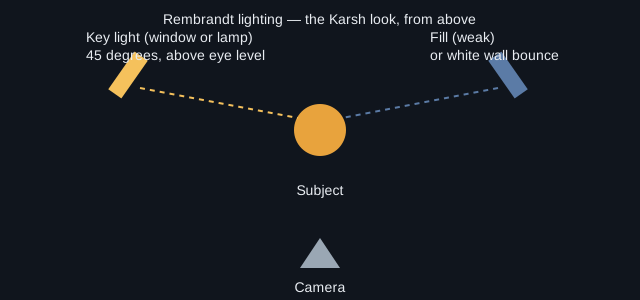
You need one window or lamp and ten minutes. Seat your subject, put the light about 45 degrees to one side and slightly above eye level, and turn the subject's face partly toward it. The far cheek should fall into soft shadow with a small triangle of light under the eye — that's the Rembrandt pattern Karsh built a career on. A white wall or sheet on the dark side bounces back just enough fill.
Then do the Karsh part technology can't replace: talk first. Five minutes of conversation will do more for a portrait than any lens.
This is the first in our Masters of Photography series — the photographers who built the craft, and the one idea from each that's worth stealing. Pair it with our portrait photography guide.